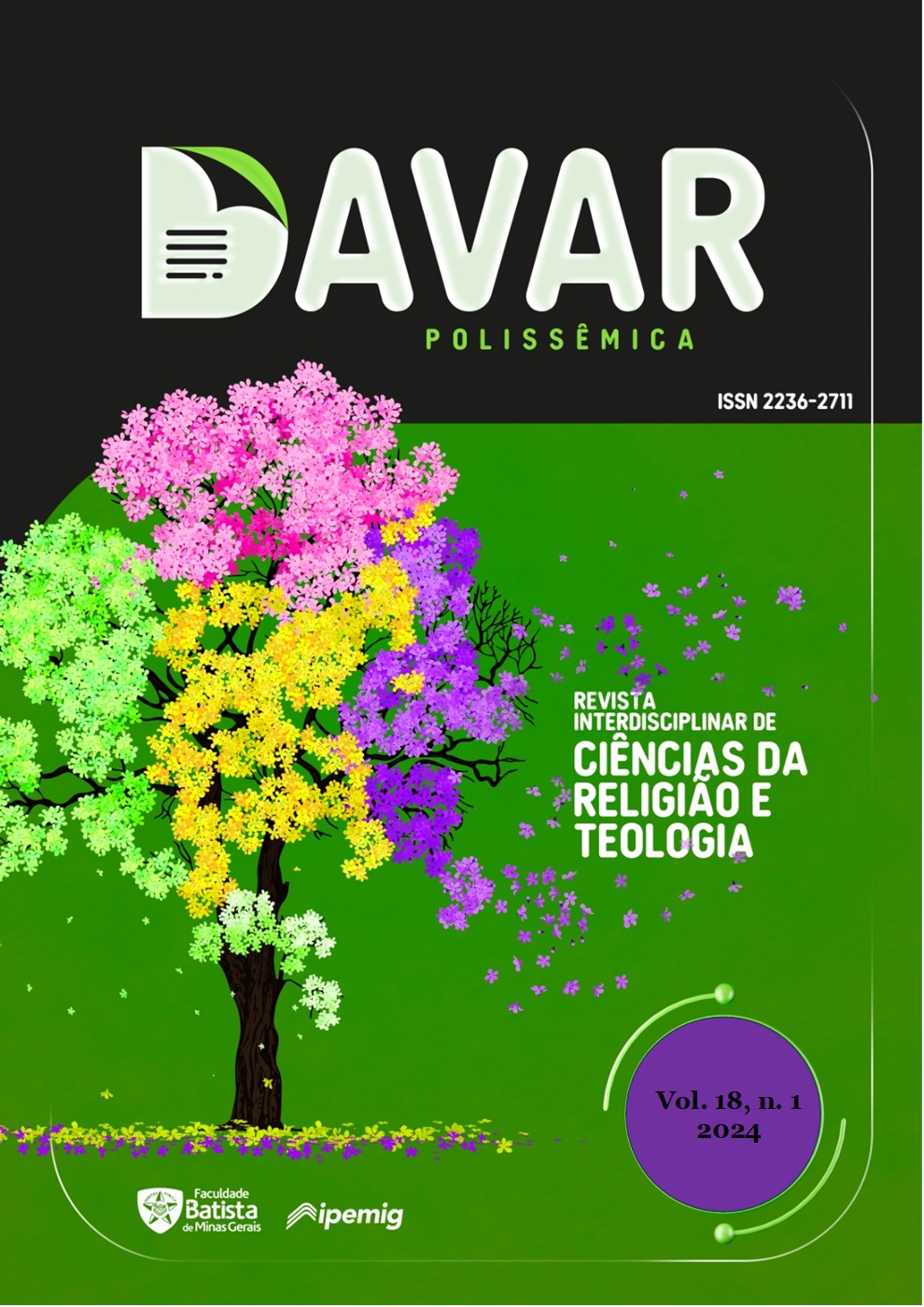
“E vendo-o, foi compadecido e cuidou dele”
Análise da parábola do bom samaritano (Lc 10,29-37)
Keywords:
Evangelho, Lucas, Bom Samaritano, Exegese, ParábolaAbstract
O bom samaritano tornou-se sinônimo do agir com compaixão. Esse sentido é oriundo da parábola contada por Jesus no Evangelho de Lucas. Jesus, provocado por um mestre da lei, dá a conhecer que a universalidade salvífica de sua ação no mundo deve levar aqueles que desejam respeitar a lei a guardar os mandamentos a agirem, mutatis mutandis, da mesma forma que Ele, com misericórdia, não com rigidez e discriminação. O bom samaritano “implode” qualquer motivo para não se deixar compadecer e cuidar daquele que sofre, indistintamente. O texto é muito claro ao comunicar essa mensagem, seja pelos contraexemplos do sacerdote e do levita, seja pelo exemplo do samaritano. A perícope de Lc 10,29-37 faz parte do diálogo entre Jesus e o mestre da lei, iniciado em Lc 10,25. Embora o cenário e os personagens sejam os mesmos, é possível distinguir as duas unidades textuais. O presente artigo, ao tratar de Lc 10,29-37, traz ao leitor aspectos importantes para a compreensão do sentido integral que pode ter sido almejado pelo hagiógrafo. Para lograr esse objetivo, a pesquisa vale-se do Método Histórico-Crítico. Apresenta uma segmentação e tradução do texto; traz igualmente: crítica textual, delimitação, desenvolvimento e estrutura do texto. Por fim, através de uma pesquisa de cunho bibliográfico-exploratório, tem-se o comentário exegético-teológico e alguns exemplos de como a parábola do bom samaritano foi interpretada ao longo da história e no Magistério recente da Igreja, buscando agir segundo as estranhas de misericórdia de Deus.
References
BENTO XVI, PP. Deus Caritas Est. Disponível em: https://www.vatican.va/content/benedict-xvi/pt/encyclicals/documents/hf_ben-xvi_enc_20051225_deus-caritas-est.html
BOVON, F. El evangelio Segun San Lucas. Salamanaca: Ediciones Sigueme, 1995. v.2.
COMTE-SPONVILLE, A. Pequeno Tratado das Grandes Virtudes. São Paulo: Martins Fontes, 1999.
CRIMELLA, M. Luca: Introduzione, traduzione e commento. Milano: Edizioni San Paolo, 2015.
EDEWARDS, J. R. The Gospel According to Luke. Cambridge: Apollos, 2015. (e-book)
ELLIGER, K.; RUDOLPH, W. (Eds.). Biblia Hebraica Stuttgartensia. 5. ed. Stuttgart: Deutsche Bibelgesellschaft, 1997
FITZMYER, J. A. The Gospel According to Luke 10-24. Garden City: Doubleday, 1985.
Flavio Josefo. La guerra de los judíos: libro IV. Madrid: Editorial Gredos, 1999.
GONZAGA, W. A Sagrada Escritura, a alma da Sagrada Teologia. In: MAZZAROLLO, I.; FERNANDES, L. A.; CORRÊA LIMA, M. L. Exegese, Teologia e Pastoral, relações, tensões e desafios. Rio de Janeiro: PUC-Rio; Santo André: Academia Cristã, 2015, p. 201-235.
GONZAGA, W. Compêndio do Cânon Bíblico. Listas bilíngues dos Catálogos Bíblicos. Antigo Testamento, Novo Testamento e Apócrifos. Rio de Janeiro, EdiPUC-Rio; Petrópolis: Vozes, 2019.
GONZAGA, W. Um Cristo compassivo e misericordioso (Lc 15,11-32). In: FERNANDES, L.A. (org.). Traços da Misericórdia de Deus segundo Lucas. Santo André – Rio de Janeiro: Academia Cristã – PUC-Rio, 2016, p. 92-112.
GONZAGA, W. O amor de Deus e do próximo na Gaudium et Spes 16 e 24. In: FERNANDES, L. A. (org.). Gaudium et Spes em questão. Reflexões bíblicas, teológicas e pastorais. São Paulo: Paulinas, 2016, p. 15-39.
GONZAGA. W. Os pobres, o amor ao próximo e a prática do bem em Gálatas 2,10; 5,14 e 6,9. In: COSTA, C. L. F.; COSTA, L. A. F. P.; SILVA, V. (orgs.). Justiça e Santidade entre o Ideal Humano e o Divino. Goiânia: Editora Espaço Acadêmico, 2018, p. 207-228.
GONZAGA, W.; BELEM, D. F., A Vida segundo o Cristo compassivo e misericordioso. Estudos Bíblicos, 37(143), 2021, p. 127-143.
GOURGUES, M. As parábolas de Lucas: do contexto às ressonâncias. São Paulo: Loyola, 2005.
GRASSO, S. Luca: traduzione e commento. Roma: Borla, 1999.
GREEN, J. B. The Gospel of Luke. Grand Rapids: W.B. Eerdmans Pub. Co., 1997.
JOÃO PAULO II, PP. Salvifici Doloris. Disponível em: https://www.vatican.va/content/john-paul-ii/pt/apost_letters/1984/documents/hf_jp-ii_apl_11021984_salvifici-doloris.html
KEDDIE, G. A. “Who Is My Neighbor?”: Ethnic Boundaries and the Samaritan Other in Luke 10:25-37. Biblical Interpretation, [s. l.], v. 28, n. 2, p. 246–271, 2020.
MARSHALL, I. H. The Gospel of Luke: a commentary on the Greek text. Exeter: Paternoster Press, 1978. (e-book)
MICHAELIS 2000: moderno dicionário da língua portuguesa. Rio de Janeiro: Reader’s Digeste; São Paulo: Melhoramentos: 2000.
NAZIR. In: The William Davidson Talmud. Disponível em: https://www.sefaria.org/Nazir.43b.4?lang=bi. Acesso: 11 de abril de 2024.
NESTLE-ALAND (eds.), Novum Testamentum Graece. Ed. XXVIII. Stuttgart: Deutsche Bibelgesellschaft, 2012.
NOLLAND, J. Luke 9:21-18:34. Dallas: Word Pub, 1993.
ODEN, T. C. La Biblia comentada por los Padres de la Iglesia: Evangelio según san Lucas. Madrid: Ciudad Nueva, 2006.
PONTIFÍCIA COMISSÃO BÍBLICA. A interpretação da Bíblia na Igreja. In: Documentos sobre a Bíblia e sua interpretação (1893-2010). 2.ed. São Paulo: Paulus, 2019.
PROCTOR, M. “Who Is My Neighbor?”: Recontextualizing Luke’s Good Samaritan (Luke 10:25-37). Journal of Biblical Literature, [s. l.], v. 138, n. 1, p. 203–219, 2019.
RAMAROSON, L. Comme ’le Bon Samaritain’, ne chercher qu’à aimer (Lc 10,29-37). Biblica, [s. l.], v. 56, n. 4, p. 533–536, 1975.
ROSS, G. Il vangelo di Luca: comentário esegetico e teologico. Roma: Città Nuova, 2001.
SCHURMANN, H. Il vangelo di Luca: Parte seconda. Brescia: Paideia, 1983.
SHEQI, N.; KAUNDA, C. J. Your Neighbour Is Yourself Reflected in the Mirror of Life: A Naga Reading of the Good Samaritan Narrative in the Context of COVID-19. The Ecumenical Review, [s. l.], v. 72, n. 4, p. 609–623, 2020.
SILVA, C. M. D. Metodologia de exegese bíblica: versão 2.0. São Paulo: Paulinas, 2022.
SNODGRASS, K. Compreendendo todas as parábolas de Jesus. Rio de Janeiro: Casa Publicadora das Assembleias de Deus, 2010.
STAVRIANOS, K. The parable of the Good Samaritan in patristic thought. The Greek Orthodox Theological Review, [s. l.], v. 57, n. 1–4, p. 29–48, 2012.
STEIN, R. H. An Introduction to the Parables of Jesus. Philadelphia: The Westminster Press, 1981.
STRAHAN, J. M. Jesus teaches theological interpretation of the Law: reading the Good Samaritan in its literary context. Journal of Theological Interpretation, [s. l.], v. 10, n. 1, p. 71–86, 2016.
TANNEHILL, R. C. Luke. Nashville: Abingdon Press, 1996. (e-book)
TUCKER, J. T. Example Stories: Perspectives on Four Parables in the Gospel of Luke. Sheffield: Sheffield Academic Press, 1998.
UTRINI, H. C.S. O sonho de uma “Igreja Samaritana”: A perícope de Lc 10,25-37 como paradigma do agir cristão a partir do Documento de Aparecida. Revista de Cultura Teológica, São Paulo, n. 93, p. 108-133, 2019.
YOMA. In: The William Davidson Talmud. Disponível em: https://www.sefaria.org/Yoma.84b.3?lang=bi. Acesso: 11 de abril de 2024.
Downloads
Published
How to Cite
Issue
Section
License
Copyright (c) 2024 Davar Polissêmica

This work is licensed under a Creative Commons Attribution-NonCommercial 4.0 International License.
I (we) submit this original and unpublished work, authored by me (us), for review by the journal Davar Polissêmica, an interdisciplinary journal of Religious Studies, Theology, and related fields, based at IPEMIG College, and I (we) agree to share the copyrights pertaining to this work with DAVAR and that its “content, or part thereof, may be copied, distributed, edited, remixed, and used to create other works, always within the limits of copyright and related rights legislation,” in any medium, whether print or electronic, provided that credit is given to the text and its authorship, including references to DAVAR. I (we) further declare that there is no conflict of interest between the topic addressed, the author(s), and any companies, institutions, or individuals.
I (We) further acknowledge that DAVAR is licensed under a CREATIVE COMMONS ATTRIBUTION 4.0 (CC BY 4.0) LICENSE: This work is licensed under a Creative Commons Attribution 4.0 International License.
Therefore, I (WE) PERMIT, “to maximize the dissemination of information,” that others distribute, remix, adapt, and build upon this work, provided they give proper credit for the original creation.